
Bikram or Yin Which Yoga Class Suits You Best

Choosing a yoga class can feel a bit like choosing between a morning swim and an evening stretch. Both can leave you feeling better, but they ask different things of your body and mind.
At Hot Yoga Gladesville, two popular options are Bikram yoga and Yin yoga. One is structured, warm and energising. The other is slow, quiet and deeply steady. If you are new to the studio, returning after a break, or simply looking for the right class for your current mood, here is how they compare.

What makes Bikram yoga different
Bikram yoga follows a set sequence of 26 postures and 2 breathing exercises in a heated room. The sequence stays the same each time, which is one of its biggest strengths.
For beginners, that repetition can be reassuring. You do not need to wonder what is coming next or keep learning a completely new flow. Over time, you start to notice small changes. A posture that felt awkward in week one may feel more familiar by week four. You learn where to pace yourself, when to rest, and how to stay present in the heat.
Bikram tends to suit people who enjoy:
A consistent class format
A clear sense of structure
A stronger, more active practice
Heat and sweat
Tracking progress through familiar postures
It can be a great choice if you like routine and enjoy leaving class feeling like you have worked steadily from start to finish. The heated room adds intensity, so it is wise to arrive hydrated, listen to the teacher, and take breaks whenever needed.
What makes Yin yoga different
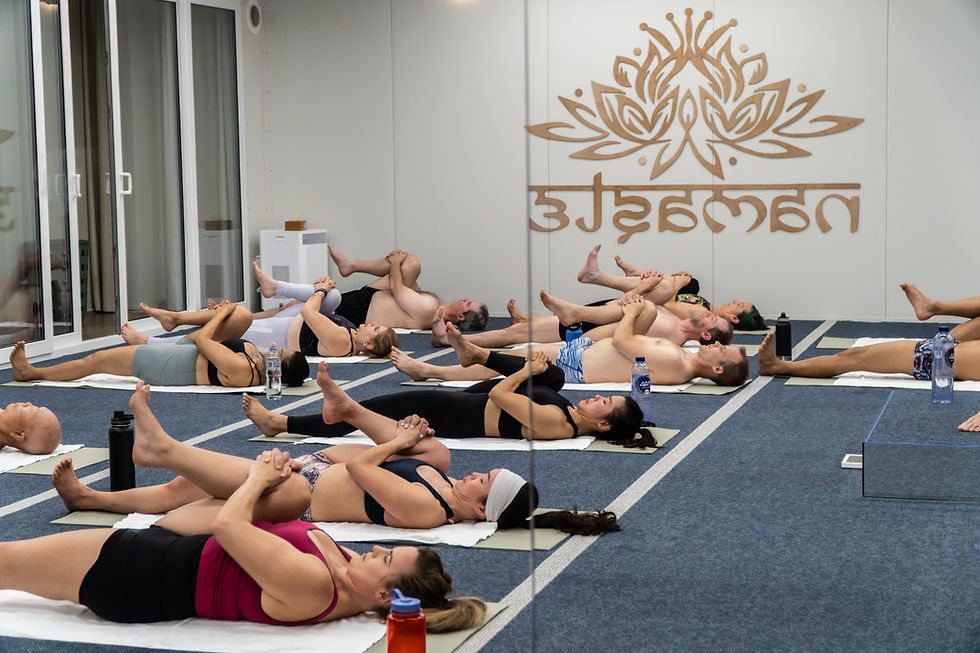
Yin yoga moves at a much slower pace. Instead of flowing quickly between shapes, you settle into mostly floor-based postures and hold them for longer periods. These stretches are generally passive, meaning the aim is not to push or perform. Props may be used, and the focus is on finding a position you can stay with comfortably.
Yin can be especially appealing if life feels busy or noisy. It gives you time to pause, breathe and soften. The challenge is different from Bikram. Rather than managing heat and movement, Yin asks you to be patient and still.
Yin tends to suit people who enjoy:
A slower, quieter class
Long-held stretches
A gentle pace
Time to unwind
A practice that balances active training or a busy week
For anyone searching for Yin Yoga, Bikram, Hot Yoga, Sydney options, the main question is not which one is “better”. The better question is which one suits your energy today.

Bikram and Yin compared
Bikram
Set 26-posture sequence
Practised in a heated room
More active and structured
Builds familiarity through repetition
Suits those who like challenge and routine
Yin
Slower class with long-held shapes
Usually cooler and quieter
More passive and spacious
Encourages patience and stillness
Suits those who want to slow down
Both classes invite focus, but they get there in different ways. Bikram gives you a strong container. Yin gives you more space. Bikram can feel energising and disciplined. Yin can feel grounding and reflective.
How they complement each other
Many students find that Bikram and Yin work best as a pair.
Bikram brings rhythm, heat and effort. Yin brings softness, patience and release. If you practise only strong classes, you may start to crave something slower. If you only practise gentle classes, you may want a session that feels more active and structured.
Together, they create a balanced week. You get time to move, sweat and focus, along with time to slow down and reset. That balance can make yoga feel more sustainable, especially when your schedule changes from week to week.
The key is to pay attention to your energy. Some days call for the focus of a heated Bikram class. Other days call for the quiet of Yin. A good routine leaves room for both.
A simple weekly routine to try
There is no perfect yoga schedule. The best routine is one you can repeat without forcing it. For many people, a mix of two to four classes a week works well.
Here are a few simple examples.
If you are new to yoga
1 Bikram class
1 Yin class
This gives you a taste of both styles without overloading your week.
If you like steady routine
2 Bikram classes
1 Yin class
This keeps the structure of Bikram as your base, with Yin as a slower reset.
If your week feels full
1 Bikram class
2 Yin classes
This option gives you movement and heat, while still making space for rest and quiet.
If you already practise often
2 to 3 Bikram classes
1 to 2 Yin classes
This can suit people who enjoy regular practice and want variety across the week.
Which class should you choose first
If you want a clear sequence, a warm room and a strong sense of routine, start with Bikram.
If you want a slower pace, longer stretches and a quieter atmosphere, start with Yin.
If you still cannot decide, try both. One class may surprise you. Some people arrive expecting to love the active heat of Bikram and find they also need Yin’s stillness. Others come for Yin and discover they enjoy the discipline of the 26-posture series.
At Hot Yoga Gladesville, you do not have to choose one forever. With an unlimited membership, you can explore both styles, build a weekly rhythm that suits your life, and let your practice change with you. Try a Bikram class, try a Yin class, and see how they feel together.


Comments